Public Financial Management: Where Africa Stands
Public Financial Management (PFM) is central to how governments mobilize, allocate, and account for public resources. In Africa, robust PFM systems are vital for fiscal discipline, effective service delivery, and building trust between citizens and governments. Recent improvements in accountability frameworks have strengthened PFM across the continent, with many countries enhancing internal controls and the effectiveness of supreme audit institutions. Internal audits are shifting from compliance-based to risk-based approaches. Increased parliamentary and civil society engagement in the budget process has also reinforced external oversight.
Notably, the World Bank has noted a significant improvement in PFM in Africa:
Challenges
Despite progress, several systemic challenges continue to affect PFM in Africa:
- Budget credibility: Frequent deviations between planned and actual spending.
- Oversight and accountability gaps: Weak audit follow-up and limited legislative scrutiny.
- Capacity constraints: Human resource shortages, skills gaps, and limited coordination across agencies.
- Transparency issues: Incomplete or delayed publication of fiscal data, with documents often not user-friendly for citizens.
- External pressures: Rising debt burdens, commodity price volatility, inflation, and changing donor flows.
- Implementation gaps: Progressive PFM laws exist, but enforcement is inconsistent.
Impact of External Factors
PFM in Africa is shaped not only by domestic reform but also by external dynamics:
- Global shocks (commodity prices, inflation, interest rates) destabilise fiscal planning.
- Debt service burdens limit fiscal space for development spending and reform investments.
- Donor conditionalities can accelerate reforms but sometimes misalign with national priorities.
- Crises like COVID-19 revealed the need for more flexible and resilient PFM systems.
- Illicit financial flows continue to erode domestic revenue.
- Digital divides slow the rollout of integrated financial systems and e-procurement.
Progress in Transparency and Accountability
Encouraging trends are emerging:
- More governments are publishing budget documents, debt data, and citizen-friendly reports.
- Audit institutions are adopting risk-based approaches instead of purely compliance-based checks.
- Parliaments and civil society organizations are gaining a greater role in budget monitoring.
- Participatory budgeting initiatives are being piloted, strengthening citizen involvement in fiscal decisions.
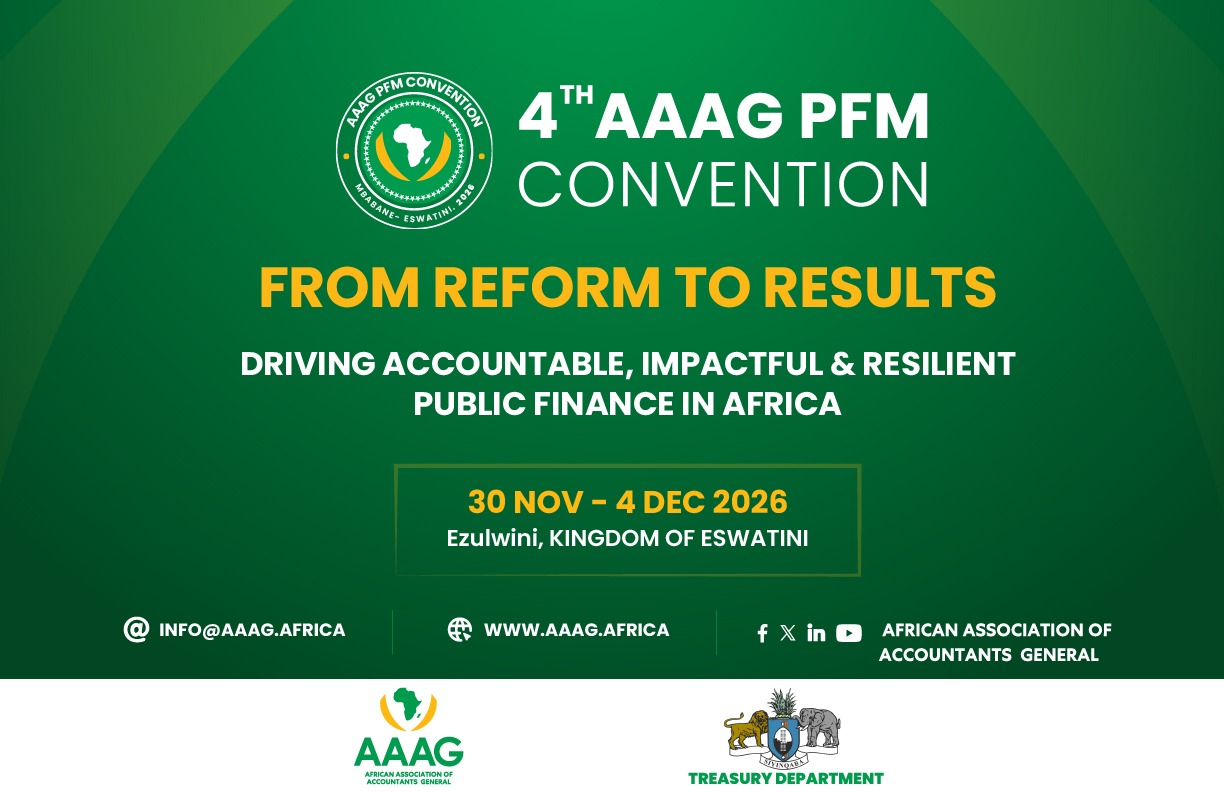
These changes reflect a gradual cultural shift toward greater accountability, transparency, and openness. The African Association of Accountants General (AAAG), launched in 2023, is championing harmonized standards, professionalisation, capacity building, and strengthened systems across the continent.
Future Directions for PFM in Africa
We remain committed to assisting our Members to navigate reforms, strengthen systems, improve transparency and accountability, and position PFM as a driver of Africa’s sustainable development. Looking ahead, the future of PFM in Africa lies in deepening reforms and embedding resilience:
- Digital transformation: Expanding IFMIS, e-procurement, and real-time reporting.
- Institutional strengthening: Professionalization of accountants, auditors, and treasuries through AAAG and partners.
- Transparency and citizen engagement: Scaling up open budgets, participatory processes, and social audits.
- Stronger oversight: Enforcing audit recommendations and empowering legislatures.
- Domestic resource mobilisation: Expanding tax bases, reducing exemptions, and leveraging digital revenue systems.
- Resilience to shocks: Building contingency planning and fiscal risk management into PFM systems.
- Continental harmonisation: Peer learning and adoption of harmonised standards to ensure consistent reforms.
- Green and climate-responsive PFM: Integrating sustainability and resilience into budgeting and public investment.